2026 Top Marble Bathroom Pros and Cons What Buyers Need?

Time:2026-09-21 Author:Mason
0%

Choosing marble for a bathroom involves more than admiring a polished showroom wall. Buyers must examine moisture, staining, etching, cleaning habits, and long-term repair costs. The central question is simple: “What are the pros and cons of marble in bathrooms?” The answer depends on the marble type, surface finish, installation quality, and household routine.

Stone-care expert Fred Hueston is widely recognized for advising homeowners about natural-stone maintenance. His practical warning is clear: “Marble is beautiful, but it is not maintenance-free.” That sentence deserves attention. A marble vanity may reflect warm light beautifully, while a lemon slice can leave a dull mark within minutes. Steam may not damage sealed marble immediately, but neglected grout, standing water, and harsh cleaners can create problems over time.

Marble offers genuine advantages. It provides distinctive veining, a cool touch, and a timeless appearance that can improve a bathroom’s visual character. Each slab also has natural variation. No two surfaces look exactly alike.

The disadvantages are equally real. Marble can scratch, stain, etch, and require periodic sealing. Darker varieties may hide wear better, but some show water spots clearly. Even experienced installers can face unpredictable color variation. Buyers sometimes expect perfection. Natural stone rarely provides it.

This guide evaluates marble through practical experience, professional care guidance, and buyer-focused evidence. It will examine comfort, durability, maintenance, cost, and resale appeal. Some claims may sound less glamorous. They are still important. A beautiful bathroom can become frustrating when daily care was underestimated.
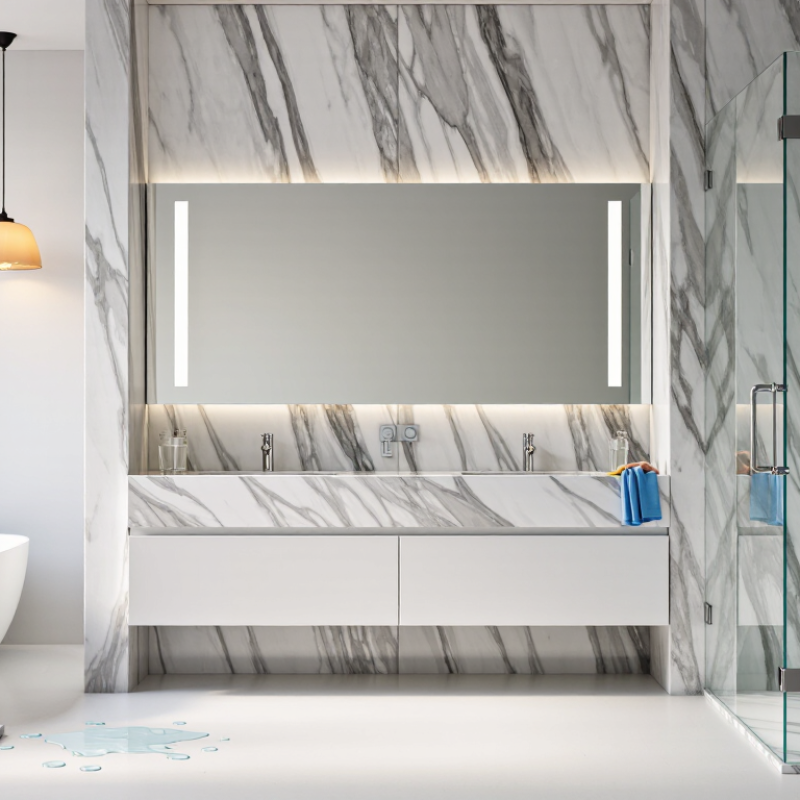
2026 Top Marble Bathroom Pros and Cons What Buyers Need?

What Is Marble and Why Is It Used in Bathrooms?

Marble is a natural stone formed when limestone changes under intense heat and pressure. Its main mineral is calcium carbonate. In bathrooms, marble is chosen for its elegant veining, cool touch, and ability to make small spaces feel brighter.

Every slab carries different lines, colors, and small mineral marks. That variation gives a bathroom character. Polished marble reflects light beautifully, while honed marble offers a softer, less reflective appearance. It feels refined. However, marble is not completely carefree. Its surface can absorb moisture, especially around shower walls, vanity edges, and grout joints. Acidic cleaners, cosmetics, and citrus products may leave dull etching. A polished floor can also become slippery when wet.

Tips: Ask for a sealed sample before purchasing. Place water, soap, and a cosmetic product on it for several hours, then inspect the surface. Choose textured or honed finishes for wet floors, and confirm the slip rating with a qualified installer. Regular sealing can reduce staining, but it cannot prevent every mark. This is where many buyers underestimate marble. A beautiful showroom sample may hide daily maintenance demands. Ask how often sealing is needed for your bathroom’s ventilation, water exposure, and cleaning habits. unerquicklich

Key Benefits of Marble Bathroom Surfaces for Buyers

Marble bathroom surfaces bring a quiet, natural character that manufactured materials often struggle to reproduce. Each slab has distinct veining, soft movement, and small mineral changes. This makes a bathroom feel tailored rather than assembled. Light-colored marble can also reflect daylight, helping a narrow room appear more open and comfortable.

Experienced installers value marble for its workable surface and long service potential. Properly selected stone can suit floors, shower walls, vanity tops, and recessed shelves. Its cool touch feels refreshing in warm bathrooms. With professional cutting, the veins can align across adjoining panels, creating a more continuous visual flow. That detail matters.

Maintenance needs honesty. Marble is porous and can react to acidic products, including some bathroom cleaners. Sealing reduces absorption, but it does not make the stone immune to stains or etching. Buyers should request a care plan and inspect sample pieces under wet and dry lighting. A polished finish may show water marks more clearly, while a honed finish can hide minor wear. Real life is messier. Budgeting only for the stone may cause problems, because strong substrates, skilled fabrication, sealing, and careful installation affect the final result. A small sample can look perfect, yet a full slab may reveal bolder movement than expected.

2026 Top Marble Bathroom Pros and Cons What Buyers Need? - Key Benefits of Marble Bathroom Surfaces for Buyers
Buying Consideration Key Benefit Potential Drawback Typical Performance or Fact Buyer Guidance
Appearance and design Unique natural veining gives each slab a distinctive appearance and supports classic, contemporary, and traditional bathroom designs. Color, veining, and small natural fissures can vary from one piece to another, so a small sample may not represent the full slab. Natural marble has pattern variation because it is formed from recrystallized carbonate rock. View the actual slab or a large-format sample before approving the final layout.
Water resistance When properly sealed and installed, marble can perform well on bathroom walls, floors, vanity tops, and shower surfaces. Marble is porous. Unsealed or poorly maintained surfaces may absorb water and staining liquids. Sealing reduces absorption but does not make marble completely waterproof or stain-proof. Use a qualified installer, provide waterproofing behind wet-area finishes, and follow the sealer manufacturer’s maintenance instructions.
Durability A properly installed marble surface can last for many years in a residential bathroom. Marble can scratch, chip, or crack from heavy impact, poor substrate preparation, or improper handling. Marble is generally softer and more scratch-sensitive than many granite varieties and porcelain surfaces. Use suitable underlayment, protect exposed edges, and avoid dropping heavy objects on countertops or tiles.
Hardness and scratching Its relatively workable composition allows cutting, shaping, edge detailing, and custom fabrication. Sand, grit, abrasive cleaners, and rough objects can dull or scratch polished finishes. Marble commonly measures about 3–5 on the Mohs hardness scale, depending on its mineral composition. Use soft cleaning cloths, rinse away grit, and place protective pads under bathroom accessories.
Acid sensitivity Regular non-acidic bathroom cleaners can maintain marble without damaging its surface. Acidic substances such as vinegar, lemon juice, some descalers, and acidic toiletries can etch calcium-carbonate marble. Etching is a chemical dulling or light-marking reaction, not the same as a removable surface stain. Choose a pH-neutral stone cleaner and wipe spills promptly. Do not use vinegar or acidic limescale products unless specifically approved for the stone.
Maintenance level Daily care is straightforward when spills are removed and the surface is kept dry and clean. Periodic resealing may be needed, and the exact interval depends on porosity, traffic, product type, and usage. A simple water-drop test can indicate whether a surface may need resealing, but it is not a laboratory test. Ask the installer for a written care schedule and test the sealer on an inconspicuous area before broad application.
Slip resistance Textured, honed, brushed, or other matte finishes can provide better traction than highly polished finishes in some wet locations. Polished marble may become slippery when wet, especially on shower floors or other areas exposed to standing water. Slip performance depends on finish, tile size, grout joints, slope, footwear, and water conditions. Request wet-slip information for the exact product and select a finish and format suitable for the intended floor area.
Heat and underfloor heating Marble conducts and distributes heat effectively, making it compatible with many properly designed radiant-floor systems. Rapid temperature changes, installation defects, or movement in the substrate can contribute to cracking. Radiant heating must be installed according to the heating-system and stone-installation requirements. Use movement joints and an approved setting system, and avoid switching heating on abruptly after installation.
Cleaning and hygiene A well-finished, correctly sealed surface is smooth and easy to wipe, with minimal grout area when large slabs are used. Harsh chemicals, abrasive powders, and some bleach-based products may damage the finish or sealer. Stone surfaces still require routine cleaning; sealing does not replace cleaning or waterproofing. Use a soft cloth or non-abrasive pad with a pH-neutral cleaner, then dry the surface to reduce water spotting.
Installation requirements Marble can be cut into many formats and used for walls, floors, shower niches, vanity tops, and trim. Large slabs and thick pieces are heavy and may require specialist transport, structural checks, and experienced fabrication. Substrate flatness, adhesive selection, grout width, edge support, and waterproofing all affect long-term performance. Confirm wall and floor load capacity, substrate preparation, waterproofing details, and installer experience before purchase.
Repairability Minor dull areas may sometimes be honed, polished, filled, or refinished by a stone-care professional. Deep cracks, severe chips, or replacement pieces may be difficult to match because natural veining varies. Repair results depend on the stone type, finish, damage location, and availability of matching material. Keep spare tiles or an offcut from fabrication for possible future repairs.
Cost planning Marble offers a broad range of colors, finishes, tile sizes, and fabrication options for different design budgets. Total cost includes the material, waste allowance, delivery, preparation, waterproofing, installation, sealing, and future maintenance. Project cost can vary substantially by region, stone grade, format, thickness, fabrication complexity, and installation conditions. Compare complete installed quotations rather than material price alone, and include a reasonable allowance for cutting and pattern matching.
Environmental considerations Natural stone can provide long service life, and durable products may reduce the frequency of replacement. Quarrying, processing, packaging, and transportation require energy and create environmental impacts. Environmental performance depends on quarry practices, transport distance, product lifespan, maintenance, and disposal. Ask for product-specific environmental information, consider locally available stone, and select a durable design that can be maintained.
Best-fit applications Well suited to vanity tops, feature walls, backsplashes, and carefully specified bathroom floors. It may be a poor choice for buyers seeking zero maintenance, maximum scratch resistance, or frequent use of acidic cleaners. Performance is highly dependent on location, finish, installation quality, sealing, and daily care. Choose marble when its appearance and natural character justify the required maintenance and care routine.
Buyer takeaway: Marble can provide a durable, distinctive, and heat-conductive bathroom surface, but it is porous, acid-sensitive, and more maintenance-intensive than many porcelain or engineered alternatives. Confirm the exact stone, finish, wet-slip suitability, installation method, sealing requirements, and complete project cost before purchasing.

Common Drawbacks and Maintenance Requirements

Marble creates a bright, hotel-like bathroom, but its beauty demands disciplined care. Its main weakness is chemical sensitivity. Marble is mostly calcite, rated about 3 on the Mohs hardness scale, according to U.S. Geological Survey mineral references. Sand, metal containers, and acidic products can scratch or etch the surface. Lemon-based cleaners are especially risky. Etching leaves pale, dull patches that polishing may not fully remove.

The Natural Stone Institute’s Dimension Stone Design Manual advises pH-neutral cleaners and professional guidance for sealing decisions. Sealing reduces absorption, but it does not make marble stain-proof. Water can still darken unsealed edges, especially around shower niches and vanity joints. EPA guidance recommends indoor humidity between 30% and 50%; poor ventilation can encourage moisture problems and weaken grout over time. In practice, owners often wipe the floor but ignore the underside of bottles. That small habit creates avoidable rings.

Tips: Wipe splashes daily with a soft microfiber cloth. Use a neutral stone cleaner, not vinegar or bleach. Place felt pads under metal accessories. Ask an installer for the marble’s absorption test before sealing. Resealing schedules vary; annual inspection is safer than blindly applying products. A matte finish may hide etching better than polished stone, but it can still stain. Even careful owners get this wrong.

Marble Types, Finishes, and Design Considerations

Marble remains popular in 2026 because each slab has natural movement, depth, and variation. Carrara marble usually shows soft gray veining on a pale background. Calacatta offers bolder veins and a brighter appearance. Darker marbles can create drama, but they may reveal water spots more easily. Always inspect the actual slab. Small samples rarely show the full pattern.

Finish changes both appearance and daily performance. Polished marble reflects light and makes compact bathrooms feel larger. However, its glossy surface highlights fingerprints, etching, and dried droplets. Honed marble feels softer and hides minor wear better. It can still absorb moisture without proper sealing. Leathered finishes add texture and visual depth, though cleaning textured areas takes more patience. Test the finish under wet conditions. A beautiful surface can become inconvenient.

Design decisions should match household habits. Use larger tiles to reduce grout lines around shower walls. Choose slip-resistant flooring rather than polished marble underfoot. Keep strong veining away from crowded niches and plumbing fixtures. Neutral grout helps the stone remain visually calm. Marble is not maintenance-free. Acidic cleaners, cosmetics, and standing water can damage its surface. A pH-neutral cleaner and periodic professional sealing are safer choices. I would avoid treating every stain as a disaster; some etching becomes part of the stone’s character. Still, that compromise should be accepted before installation.

How to Evaluate Cost, Quality, and Long-Term Value

Marble can make a bathroom feel cooler, brighter, and more substantial. Its value, however, depends on more than appearance. The 2024 U.S. Houzz Bathroom Trends Study reported a median major-remodel spend of $35,000, showing how quickly material choices affect the total budget. Marble itself may cost $40–$100 per square foot installed, depending on thickness, rarity, fabrication, and local labor. Ask for a written quote. Confirm waste, edge finishing, sealing, delivery, and substrate preparation.

Quality is visible in the details. Inspect full slabs under natural light, not only small samples. Look for consistent veining, repaired cracks, lippage, and polished edges. A qualified installer should explain moisture protection and movement joints. The Natural Stone Institute recommends suitable cleaners and periodic sealing, but sealing does not make marble stain-proof. Acidic products can etch the surface. That dull ring around a sink is not a manufacturing defect.

Tips: Compare three itemized estimates. Request a sample test with water, oil, and mild soap. Check the installer’s stonework portfolio. Keep spare tiles if possible. The 2024 Cost vs. Value Report places upscale bathroom-remodel recovery below full cost, at roughly 45.7% nationally. That figure is not a marble guarantee. It suggests resale value rarely repays every luxury upgrade. A careful buyer should judge daily comfort, maintenance time, and repair risk. I would not choose the most dramatic slab automatically; beautiful movement can become visual noise in a small room.

FAQS

Why is marble bathroom maintenance demanding?

Marble is relatively soft, measuring about 3 on the Mohs hardness scale. Sand, metal, and acidic products can scratch or etch it. Care matters.

Which cleaners are safe for marble?

Use a pH-neutral stone cleaner and a soft microfiber cloth. Avoid vinegar, lemon-based products, bleach, and other acidic cleaners. Wrong cleaner, dull surface.

How can I prevent water stains and bottle rings?

Wipe splashes daily, including around shower niches and vanity joints. Dry the undersides of bottles. Small habits help.

Does sealing make marble completely stain-proof?

No. Sealing reduces absorption but cannot prevent every stain. Ask an installer to perform an absorption test before sealing.

How often should marble be resealed?

Resealing schedules vary by stone and bathroom conditions. Annual inspection is safer than applying sealer blindly. The stone may need less frequent treatment.

What bathroom conditions can damage marble or grout?

Poor ventilation can increase moisture and weaken grout over time. Indoor humidity around 30% to 50% is generally recommended. Open the fan after showers.

What should I inspect before buying marble?

View full slabs under natural light. Check veining, repaired cracks, polished edges, and uneven tile surfaces. Small samples can hide problems.

What costs should a marble estimate include?

Request an itemized quote covering material, waste, delivery, edge finishing, sealing, labor, and substrate preparation. Installed costs may range from $40 to $100 per square foot.

Is marble always a good long-term financial choice?

Not necessarily. Luxury bathroom upgrades may recover only part of their cost during resale. Consider comfort, maintenance time, and repair risk.

Is a dramatic marble pattern suitable for a small bathroom?

Strong movement can overwhelm a compact room. A quieter pattern may feel calmer. I would not choose the boldest slab automatically.

Conclusion

Marble is a natural stone valued in bathrooms for its distinctive veining, smooth texture, and timeless appearance. It can make walls, floors, countertops, and shower areas feel brighter and more luxurious while offering good durability when properly selected and installed. What are the pros and cons of marble in bathrooms? Its main advantages include unique design character, strong visual appeal, and the ability to complement both traditional and modern interiors. However, marble is porous and can absorb moisture, stains, or acidic substances, so it requires sealing, gentle cleaning, and regular maintenance.

Buyers should compare marble varieties, colors, veining patterns, surface finishes, thickness, and slip resistance before making a decision. Honed finishes may provide a softer look and better traction, while polished surfaces create more shine but can show scratches or water marks. Cost should include material, installation, sealing, repairs, and long-term care. Evaluating quality and maintenance needs carefully helps buyers choose marble that offers lasting beauty and practical value.

Mason

Mason

Mason is a seasoned marketing professional with a deep expertise in the company's offerings and a passion for driving brand awareness. With a strong background in digital marketing strategies, he has an innate ability to connect with diverse audiences and effectively communicate product benefits.......