China’s marble industry offers remarkable variety, from bright white stones to dark green and richly veined surfaces. This guide examines ten important Chinese marble types and the qualities that shape their market value. Each stone reflects its geological history, quarry location, color, pattern, and processing method.
Why does marble vary so much in price? The answer is rarely just appearance. A clean, continuous vein may require careful block selection and create more cutting waste. A large quarry block can produce matching slabs, while smaller blocks may limit project consistency. Extraction difficulty matters too. Deep deposits, fractured layers, and challenging terrain can increase labor, equipment, and transport costs.
In practical sourcing, buyers should inspect full slabs rather than small samples. Veins can change dramatically across a two-meter surface. Thickness, polishing quality, resin treatment, water absorption, and edge finishing also affect the final quotation. Reliable suppliers should provide quarry information, inspection records, test data, and clear product specifications. Comparing prices without checking these details can be misleading.
Some differences remain difficult to judge from photographs. Lighting often changes the perceived color. Even experienced buyers can overlook hidden repairs or uneven finishing. No guide is perfect. A careful decision combines visual appeal, technical performance, application needs, and supplier credibility. The following comparison offers a practical starting point for understanding China’s top ten marble types and their widely different prices.
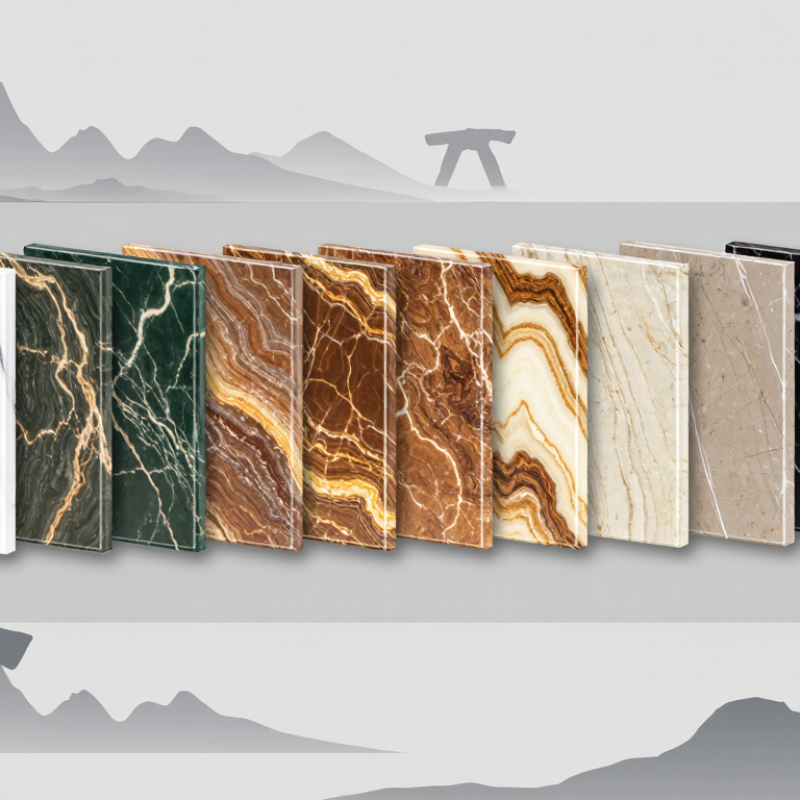
What Defines China’s Top 10 Marble Types
China’s “top ten” marble types are not defined by one official ranking.
In practice, buyers compare geological origin, color stability, block size, and processing performance. A stone earns attention when its appearance is recognizable and its supply remains dependable. That sounds simple. It is not.
White varieties from Guangxi and Yunnan are often selected for bright backgrounds and restrained veining. Sichuan wood-grain marble is valued for layered lines resembling timber, while darker stones from northern regions create sharp contrast. Names alone prove little. Quarry section matters. One block may show quiet veins; another may contain open fissures, mineral spots, or uneven color.
Experienced inspectors examine six faces, not only the polished sample. They also check water absorption, bending strength, thickness tolerance, and resin repair before approving a project.
Price differences come from rarity, extraction difficulty, usable yield, and finishing requirements. A dramatic vein may increase value, yet reduce matching slabs. In field inspections, attractive samples can disappoint after cutting because patterns change across the block. That risk deserves honest discussion. Reliable classification should combine laboratory data, quarry records, recent inspection, and intended application. Interior walls, floors, kitchens, and exterior paving demand different performance levels. “Top” should mean suitable, consistent, and traceable, rather than merely expensive or fashionable. Even careful evaluations need revision when a quarry changes its working bench.
Profiles and Distinctive Features of the Ten Leading Chinese Marbles
China’s leading marbles differ in color, grain, hardness, and block yield. Geological naming is not always consistent. That matters.
Guangxi White shows fine gray veins and a calm background. Sichuan White is brighter, with cloudy movement and strong polishing potential. Yunnan White often carries warm, soft veining. Fujian White appears cleaner, but small fissures can reduce usable slabs. Hubei White combines a cool base with delicate linear patterns. Guizhou White may display denser gray networks and a heavier visual effect. Gansu Gray offers smoky layers and strong tonal variation. Henan White is usually compact, though shade differences occur between quarries. Jiangxi Red brings rose and rust tones, with more visible mineral texture. Tianshan Gray presents silver-gray bands and a restrained, architectural character.
The U.S. Geological Survey’s Mineral Commodity Summaries 2024 lists China among the world’s major dimension-stone producers. The China Stone Industry Annual Report 2023 also emphasizes processing yield, quarry recovery, and finished-slab quality as major commercial factors. Prices therefore reflect more than appearance. A block with clean, large faces produces more saleable slabs. Veining direction also changes cutting loss. Some white stones photograph beautifully but reveal pinholes under close inspection. That is easy to miss.
Finishing changes the result. Honed surfaces soften contrast, while polishing exposes crystals and micro-fractures. Reported prices can vary widely between similar names because thickness, inspection standards, transport distance, and selected grade differ. In practice, a small sample is not enough. Full-block inspection is safer. The imperfect part is unavoidable: natural stone never repeats exactly.
How Origin, Color, Veining, and Quality Shape Marble Value
China Top 10 Marble Types: Why Do Prices Vary So Much?
Marble value begins with origin. Different Chinese quarries produce distinct mineral patterns, densities, and block sizes. A remote quarry may have higher transport and extraction costs. Limited output can also raise prices. In my experience, origin alone never proves superior quality. Buyers should request quarry details, production records, and recent inspection data.
Color strongly influences demand. Clean white, deep black, and unusual green tones often attract premium prices. Veining matters too. Thin, balanced veins may create a calm surface, while bold lines offer dramatic movement. However, beauty remains subjective. A rare pattern can sell quickly, yet it may not suit every interior. Quality includes consistency, thickness, water absorption, hardness, and repair history. A perfect-looking slab can still disappoint after installation.
Tips: View several slabs under natural and warm lighting. Check the back for mesh, cracks, resin, or hidden repairs. Compare samples with the full slab, because small pieces can mislead. Ask how the stone was finished and sealed. I have seen buyers focus on color and overlook edge strength. That mistake becomes expensive. Also, allow for waste during cutting, especially with strong veining. Price per square meter is only part of the final cost.
Why Processing, Availability, and Market Demand Change Prices
Prices among China’s top ten marble types rarely reflect color alone. A pale stone with quiet veining may cost less than a dramatic slab, but not always. Quarry yield matters. Some blocks split cleanly, while others hide cracks, cloudy patches, or uneven layers. When usable material falls from 70% to 45%, the finished price rises quickly. A small sample can mislead. It may show the best face of the block.
Processing creates another major difference. Standard polished tiles need less labor than book-matched panels, thick edges, waterjet cuts, or honed surfaces. Large slabs require careful lifting and reinforced packing. One chipped corner can create waste across an entire layout. Fabrication also varies by tolerance, inspection, and replacement policy. These details are easy to overlook in a low quotation. Cheap processing can leave dull edges or visible glue lines.
Availability moves prices too. A quarry may produce one type irregularly, while a hotel project suddenly requests hundreds of matching slabs. Stock then disappears, and new blocks may differ in tone. Prices shift. Freight distance, block size, and seasonal production add pressure. Market demand can reverse the gap within weeks. Not every slab matches. A reliable buyer should compare the same thickness, finish, grade, and delivered terms. Even then, estimates remain imperfect. Natural stone refuses perfect prediction. Ask for recent batch photos, test results, and clear allowances for shade variation.
China Top 10 Marble Types: Why Do Prices Vary So Much?
Indicative average market prices for polished marble slabs in China, shown in USD per m².
Prices reflect typical differences in processing difficulty, material availability, pattern consistency, and market demand; actual quotations vary by grade, thickness, finish, order volume, and logistics.
Rare white backgrounds, strong veining, low block yield, complex processing, and high design demand generally increase the final price. More widely available stones with consistent supply usually remain more affordable.
How to Compare Chinese Marble Types for Different Applications
Comparing Chinese marble types requires more than matching color to a sample. In practical sourcing, inspect density, water absorption, veining, block size, and surface consistency. White, grey, beige, green, and red marbles can perform differently, even when their prices look similar. A dense stone with low absorption usually suits bathrooms and busy interiors better. Samples can mislead. Quarry images rarely show natural variation clearly.
For kitchen counters and hotel floors, choose marble that accepts polishing and resists staining. Honed finishes can hide small scratches, while polished surfaces show stronger color and veining. Exterior cladding needs careful review of freeze-thaw performance, bending strength, and anchor compatibility. Wet areas also require slip testing, especially when the surface becomes smooth or soapy. Large slabs may reduce joints, but they need stable blocks and skilled handling.
Price comparisons should use installed cost per square meter, not only the slab price. Quarry yield, block size, grade, vein direction, finishing method, packaging, and transport all affect the final figure. Request recent test reports and inspect several slabs from the same batch. Color matching is never perfect. That detail is often underestimated. A lower-priced marble may need more resin filling, extra sorting, or frequent maintenance. Those hidden costs can change the best choice for a project.
FAQS
Origin influences mineral patterns, density, block size, and transport costs. Remote quarries may produce more expensive material. Limited output can raise prices. Not always. Origin alone does not prove quality. Request quarry details, production records, and recent inspection data.
Clean white, deep black, and unusual green tones often attract stronger demand. Color remains subjective. A rare shade may suit one room but fail in another. View samples beside the actual walls and lighting.
Thin, balanced veins can create a quiet surface. Bold veins add dramatic movement. Strong patterns may increase waste during cutting. The full slab matters more than a small sample. Small samples can mislead.
Check consistency, thickness, water absorption, hardness, cracks, resin, mesh, and repair history. Inspect the slab’s back carefully. A perfect face can hide problems. I once focused too much on appearance. That was a costly mistake.
Choose stone that accepts polishing and resists staining. Dense marble with low water absorption usually performs better. Honed finishes can hide minor scratches. Polished surfaces show stronger color and veining. Sealing still requires attention.
Review freeze-thaw performance, bending strength, and anchor compatibility. Exterior panels need stable fixing systems. Quarry photographs cannot prove outdoor performance. Request recent technical test reports before ordering.
Wet areas require slip testing, especially when surfaces become wet or soapy. A smooth finish may look attractive but feel unsafe. Test a real finished sample under water. Appearance is not enough.
Compare installed cost per square meter, not only slab price. Include cutting waste, yield, block size, finishing, packaging, transport, and installation. Extra sorting or resin filling can change the final cost. The cheapest slab may not be cheapest overall.
Natural color matching is never perfect. Several slabs reveal differences in shade, veins, and surface consistency. Large slabs may reduce joints but require careful handling. One sample cannot represent the entire order. That detail is often underestimated.
Conclusion
China’s top 10 marble types are distinguished by their geological origin, background color, veining patterns, texture, hardness, and overall consistency. Each variety offers a different visual character, from calm and uniform surfaces to dramatic veins and contrasting natural movement. These features influence how the stone is selected for flooring, walls, countertops, stairs, bathrooms, furniture, and decorative applications. Understanding the strengths and limitations of each type helps buyers match appearance and performance with project requirements.
Why does marble vary so much in price? The main reasons include quarry location, block size, color rarity, vein quality, material consistency, processing complexity, availability, and market demand. Marble with stable supply and simple patterns is often more affordable, while rare colors, distinctive veining, large intact blocks, and carefully finished surfaces can command higher prices. Comparing Chinese marble types should therefore involve more than appearance alone; buyers should also evaluate durability, maintenance needs, yield after cutting, finish quality, and suitability for the intended application.

 Gem Marble